 |
 |
 |
|
         |
|||
|
|
|
|
|
|||
 |
 |
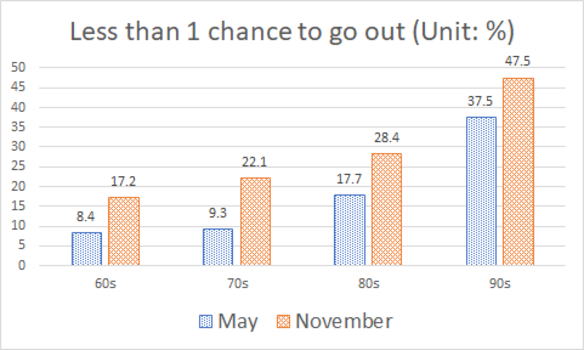 Go out once a week or less (Graph 1) |
|
60 generations May...8.4% → November...17.2% Generation 70 May...9.3% → November...22.1% Generation 80 May...17.7% → November...28.4% Generation 90 May...37.5% → November...47.5% We found that the tendency to stay home has increased by about 10% in all age groups from 60s to 90s. "Forgetfulness is also on the rise. |
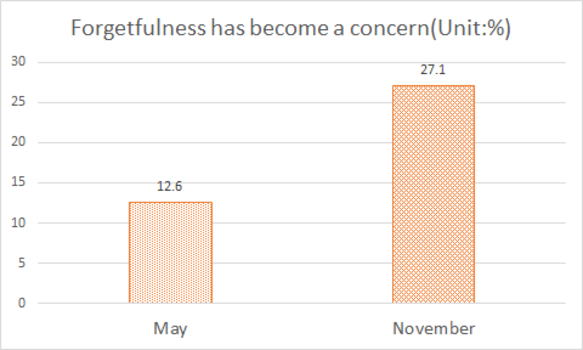 Forgetfulness has become a concern (Graph 2) |
|
The percentage of people in their 60s and over who say they have started
to hear the same thing over and over again or worry about forgetting things. May...12.6% → November...27.1% The number of people who had become forgetful was more than doubled. |
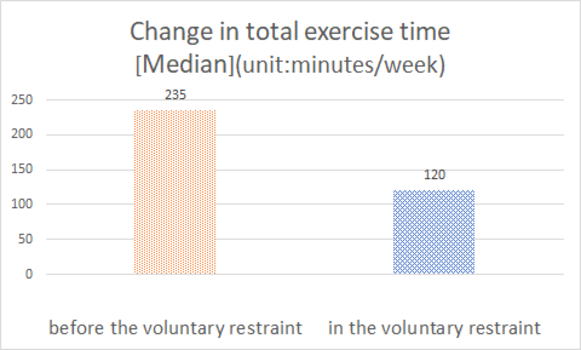 Change in total exercise time (Graph 3) |
| Before the self-restraint, it was 235 minutes per week, while during the self-restraint it was 120 minutes per week, a decrease of 115 minutes. |
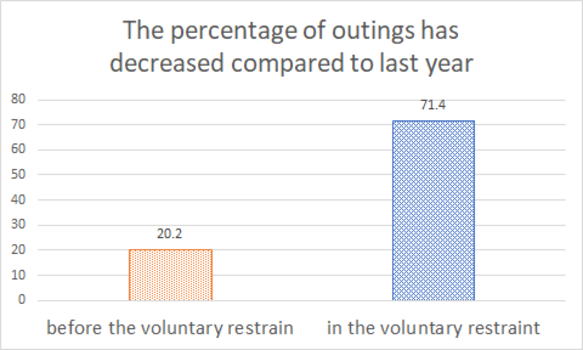 Those who went out less frequently than last year (Graph 4) |
| Before the self-restraint, the rate was 20.2%, while during the self-restraint, the rate was 71.4%, an increase of 51.2%. |
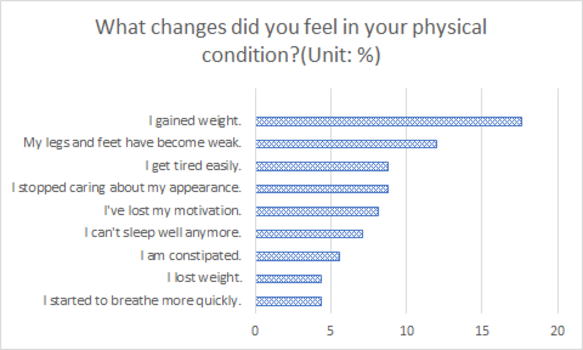 What changes have you felt in your physical condition? (Graph 5) |
| We have found that there are many people who feel a change in their physical condition. |
| Changes before and after the outbreak of the new coronavirus infection and after the declaration of the second state of emergency (after July 2020) From survey data by the University of Tokyo's Research Institute of Gerontology (from Chunichi Shimbun) |
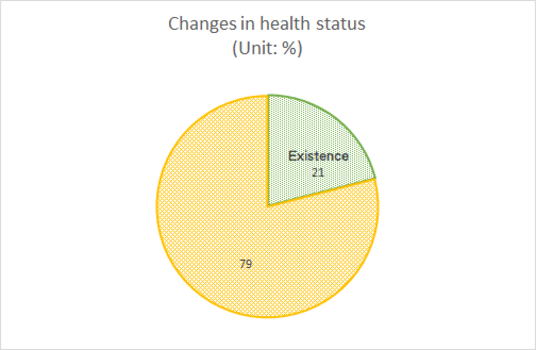 |
| Why the change in health status? I don't leave the house much anymore and I've gained weight. He doesn't talk to people, so he's slow to move. I'm not going out as much and I'm losing muscle strength. My internal organs have been deteriorating and I've been eating less and less. I get tired easily and my legs feel weak when I walk. |
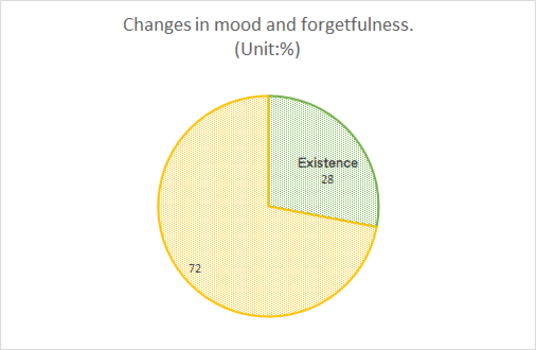 |
| Why the change in feelings and forgetfulness? Depressed by the fear of infection and not being able to go out I can't wait to clean and prepare food. I'm stressed out and can't sleep. I'm less energetic than before. Forgetting what I was told, forgetting things more often. I was a positive person, but I became a worrier. |
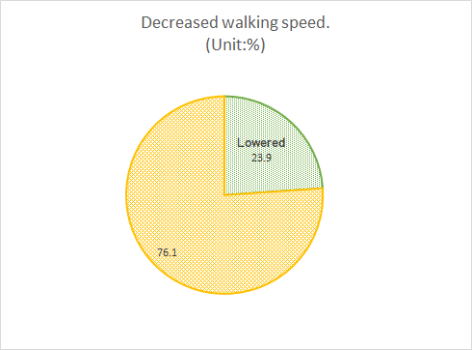 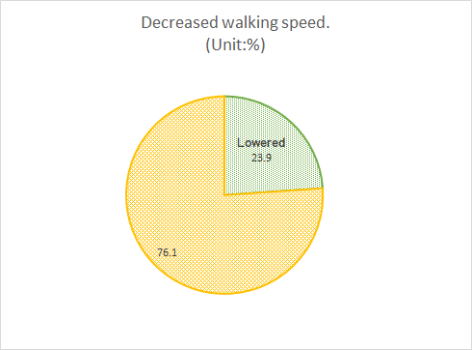 |
 The number of minutes of physical activity per week among the elderly in Japan has decreased by about 60 minutes (about 30%) before and after the spread of the new coronavirus infection. Only half of the elderly are consciously exercising even in the midst of self-restraint. The exercise I do is mostly walking and light exercise in my home, both of which I do alone. It is feared that if people continue to live in a state of reduced physical activity without exercising, the number of people who require nursing care will increase rapidly after the new coronavirus infection is under control. We have collected data from municipalities across the country for the past year, and have found scientific evidence that the elderly are suffering from a marked decline in physical and mental functions based on inactivity due to prolonged self-restraint, a condition that can be called "Corona Fail. In the first six months alone, more than 40% of the elderly showed a marked decrease in the frequency of going out (14% of the elderly went out only once a week), as well as an increasein eating disorder, a loss of connection with others, and decreased community interaction. The loss of muscle mass in the whole body can also be confirmed by comparing before and after, and the loss in the trunk is particularly noticeable. In addition, there is a decrease in grip strength, a decrease in calf circumference, and a decrease in glide. |
