@
ƒsummary„
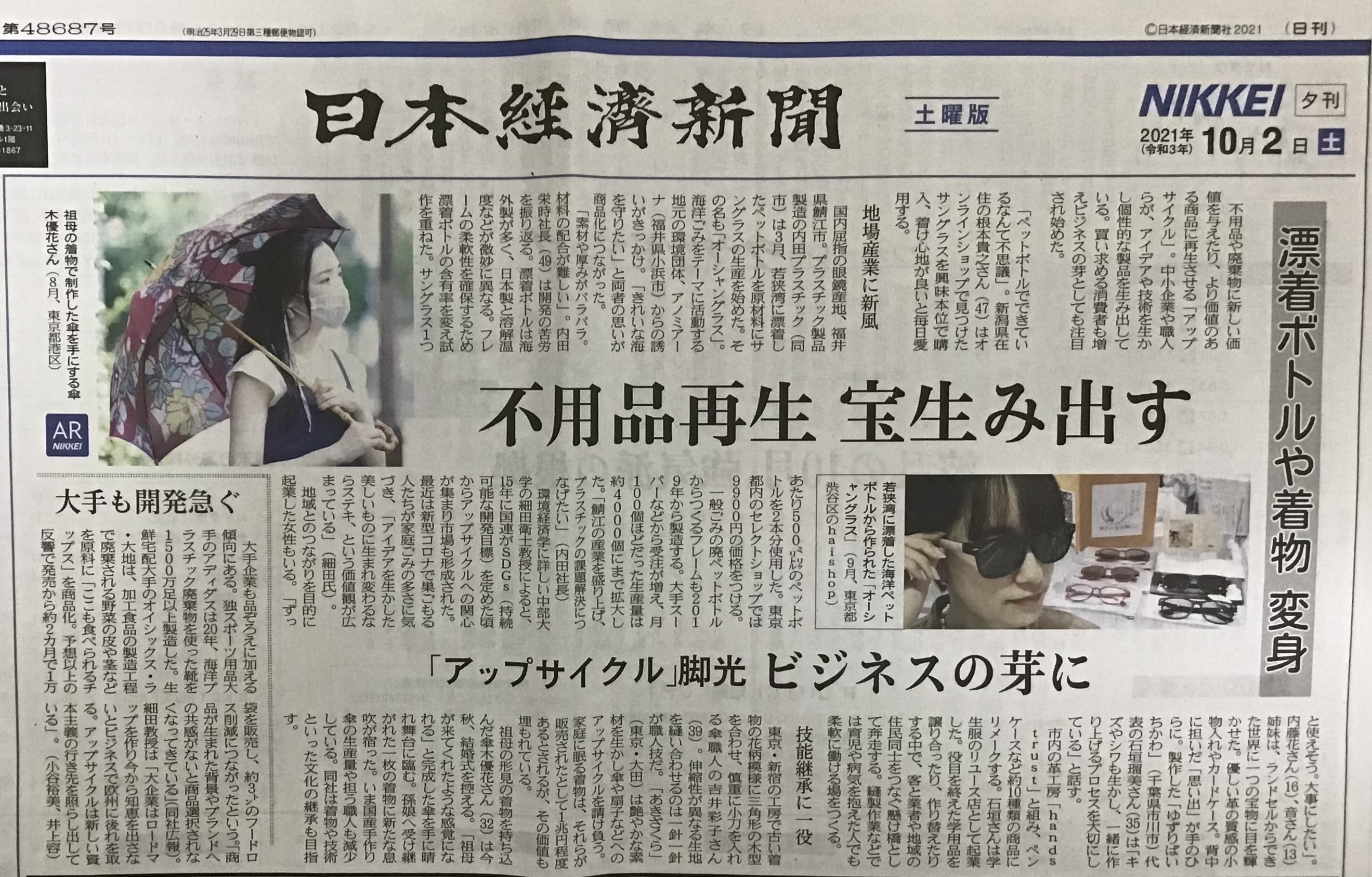
Upcycling" is the process of giving new value to unwanted or discarded items, or recycling them into more valuable products. Small and medium-sized companies and artisans are using their ideas and skills to create unique products. Since the United Nations established the SDGs in 2015, interest in upcycling has been growing and a market has formed. In addition, people who are holed up in a nest due to the new coronavirus have recently become aware of the large amount of household waste, and the sense of value that "it would be nice if ideas could be reborn into something beautiful" is spreading.
As an example, a plastic product manufacturing company in Sabae City, Fukui Prefecture, has begun producing sunglasses from plastic bottles that have washed ashore in Wakasa Bay. Each pair of sunglasses uses the equivalent of two 500ml plastic bottles. The company also produces frames made from waste plastic bottles from general waste.
Other efforts to reduce waste include the sharing of school supplies that have served their purpose. By doing this, they are building a bridge between customers, vendors and local residents.
In addition, by upcycling, we aim to pass on the culture of kimonos and techniques.
And in 2020, German sporting goods giant Adidas manufactured more than 15 million pairs of shoes using ocean plastic waste.
In this way, "upcycling" is attracting attention from all over the world. This illuminates the direction of the new Japanism.
@@@@@@@@@@@@@@@@@@@
ƒsummary„
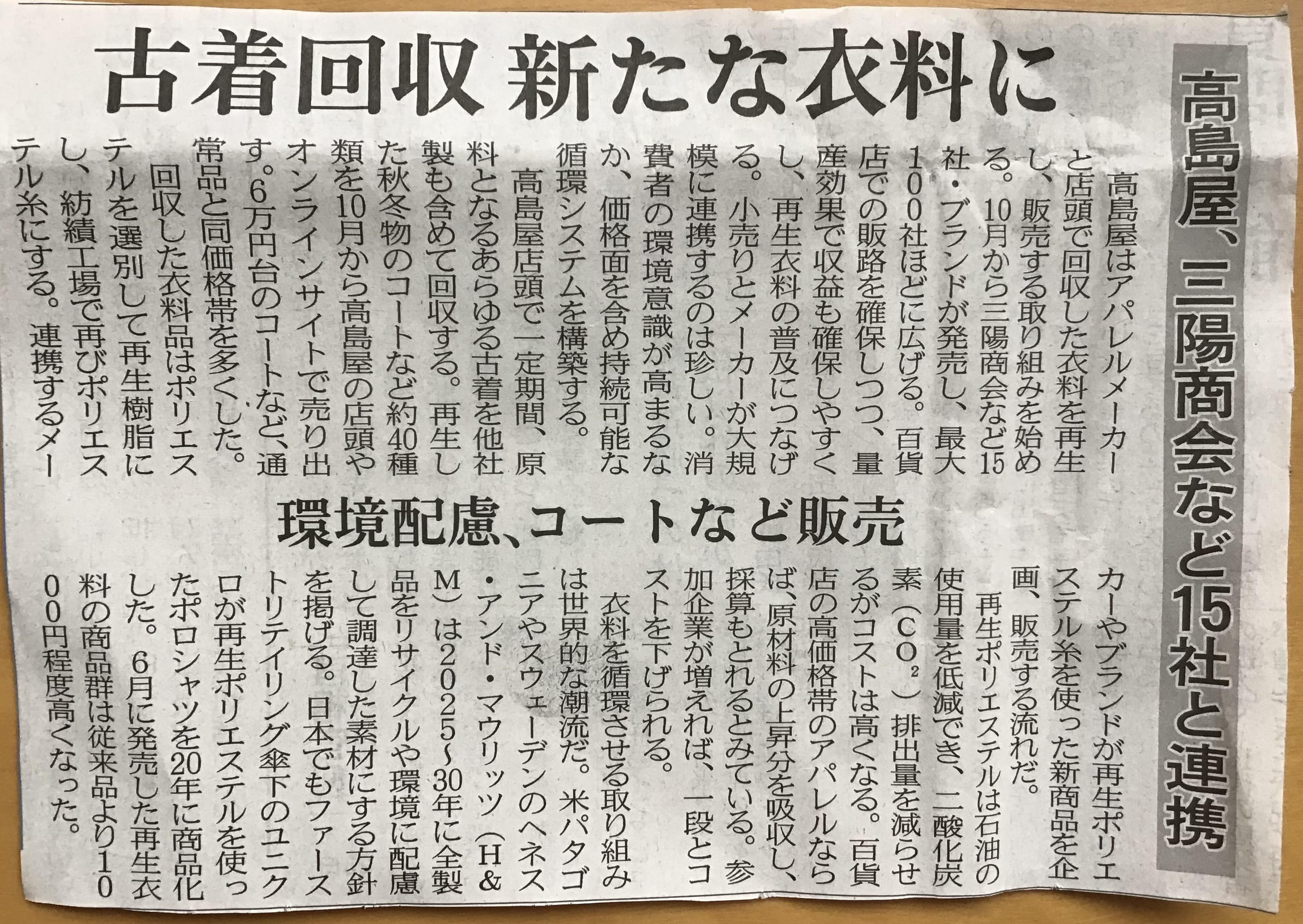
In response to growing environmental awareness among consumers, Takashimaya has launched an initiative with apparel manufacturers to recycle and sell clothing collected at stores in order to build a sustainable circulation system, including pricing.
The recycled garments have been sold at Takashimaya stores and online since October. Many of them are in the same price range as regular products.
The collected garments will be sorted for polyester to be made into recycled resin, which will then be made into polyester yarn again at the spinning plant. Recycled polyester can reduce the amount of petroleum used, which in turn can reduce carbon dioxide emissions.
As for other corporate initiatives, UNIQLO, a subsidiary of Fast Retailing, has commercialized polo shirts made of recycled polyester in 2020. This is the first time that a company has been able to use recycled materials in its products.
Yomiuri Chukosei Newspaper
@@
ƒsummary„
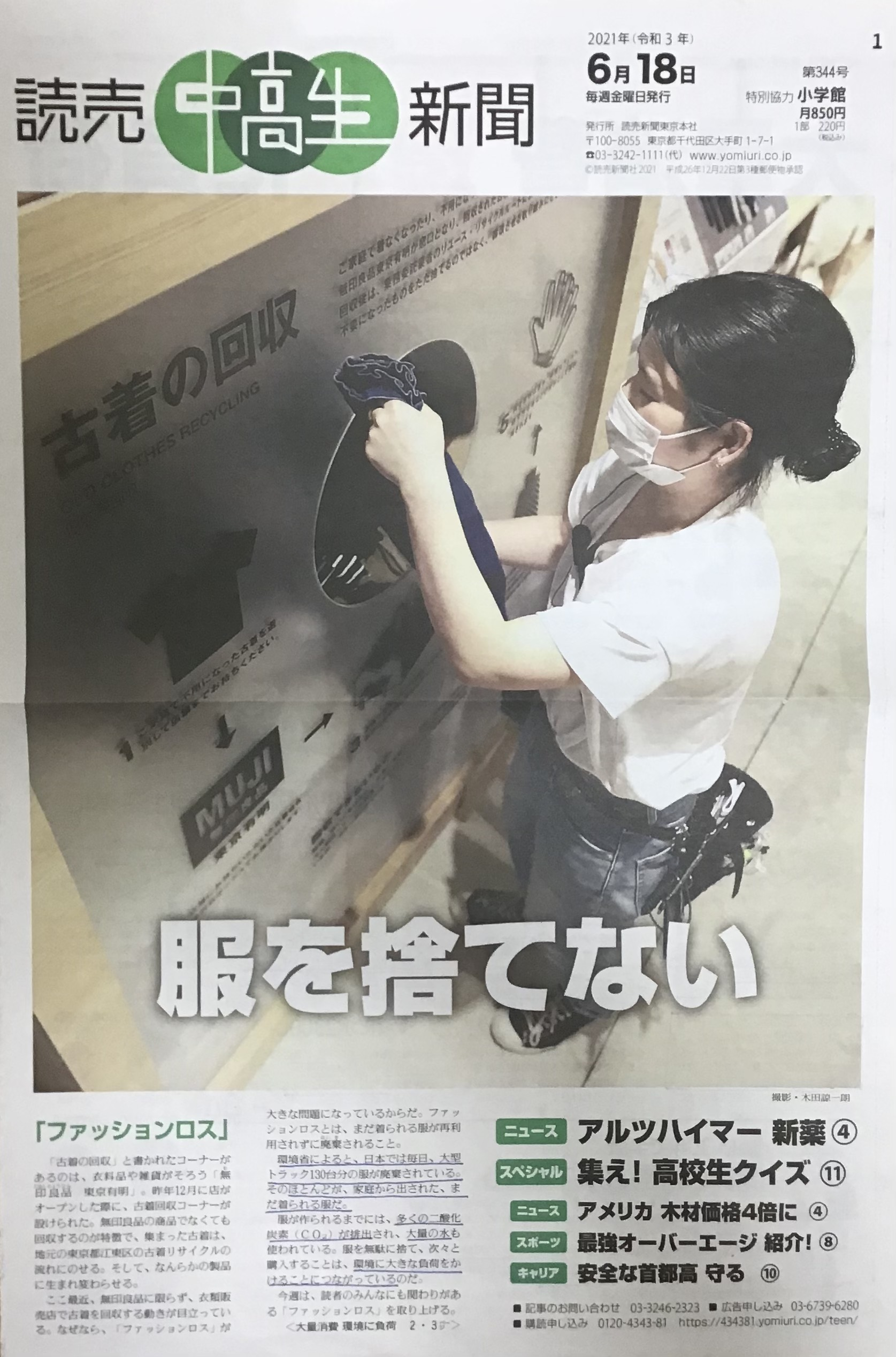
In recent years, there has been a noticeable increase in the number of clothing mass merchandisers collecting used clothing. This is because "fashion loss" has become a major problem. Fashion loss is when clothes that can still be worn are discarded instead of being reused. According to the Ministry of the Environment, 130 truckloads of clothes are discarded every day in Japan. Most of them are still wearable clothes from households.
In the process of making clothes, a lot of carbon dioxide is emitted and a lot of water is used. By throwing away clothes unnecessarily and buying one after another, we are putting a huge burden on the environment. ƒsummary„
There are four R's that you can do to reduce fashion loss, such as recycling clothes and second-hand clothing activities. Recycle@
The clothes that are to be disposed of are reincarnated into other items, separated by material and recycled. Used clothes collected at stores are sorted by material and color, and the yarn, which is spun into cotton, is made into military gloves and blankets. The fibers are then intertwined to form felt, which is then used as insulation material for automobiles. Reuse
Let others come and reuse the clothes you no longer wear. Selling them as hand-me-downs or at flea markets is also reuse, but there is also a way to donate them to those who need them. Fast Retailing, which operates the UNIQLO brand, works with the United Nations High Commissioner for Refugees (UNHCR) to send collected children's clothes to refugee children in Africa and the Middle East.
Repair
Even if you have scratches or stains, or if your size no longer fits, you can still wear your clothes by repairing them. Goldwyn, which operates the outdoor brand "THE NORTH FACE", also focuses on repair services under the theme of "long wear" and devises designs that can be worn for a long time. Reduce@
Reducing the number of clothes owned is also effective in reducing loss, and rental services are spreading in the apparel industry. In the apparel industry, rental services are expanding. This is an image of having a large number of members share clothes.
Naomi Trauden, who also works as a model, has an initiative she is taking to reduce fashion loss in order to combine her love for fashion with her desire to solve the fashion loss problem. Below are some of them.
Think carefully when buying clothes.
Check the brand's website and clothing tags for environmentally friendly products.
I also actively enjoy second-hand clothes.
If you are worried about damage, remake it yourself.
When you let go of something, think of ways to keep it out of the garbage, such as using a recycling store.
Fashion is fun. But it's not pleasant to pretend that you don't see the situation of the earth getting dirty for your own enjoyment. I want everyone to know the background of clothes, think about the life of clothes, and enjoy fashion that makes you feel good when you wear it.
@@
@ƒsummary„
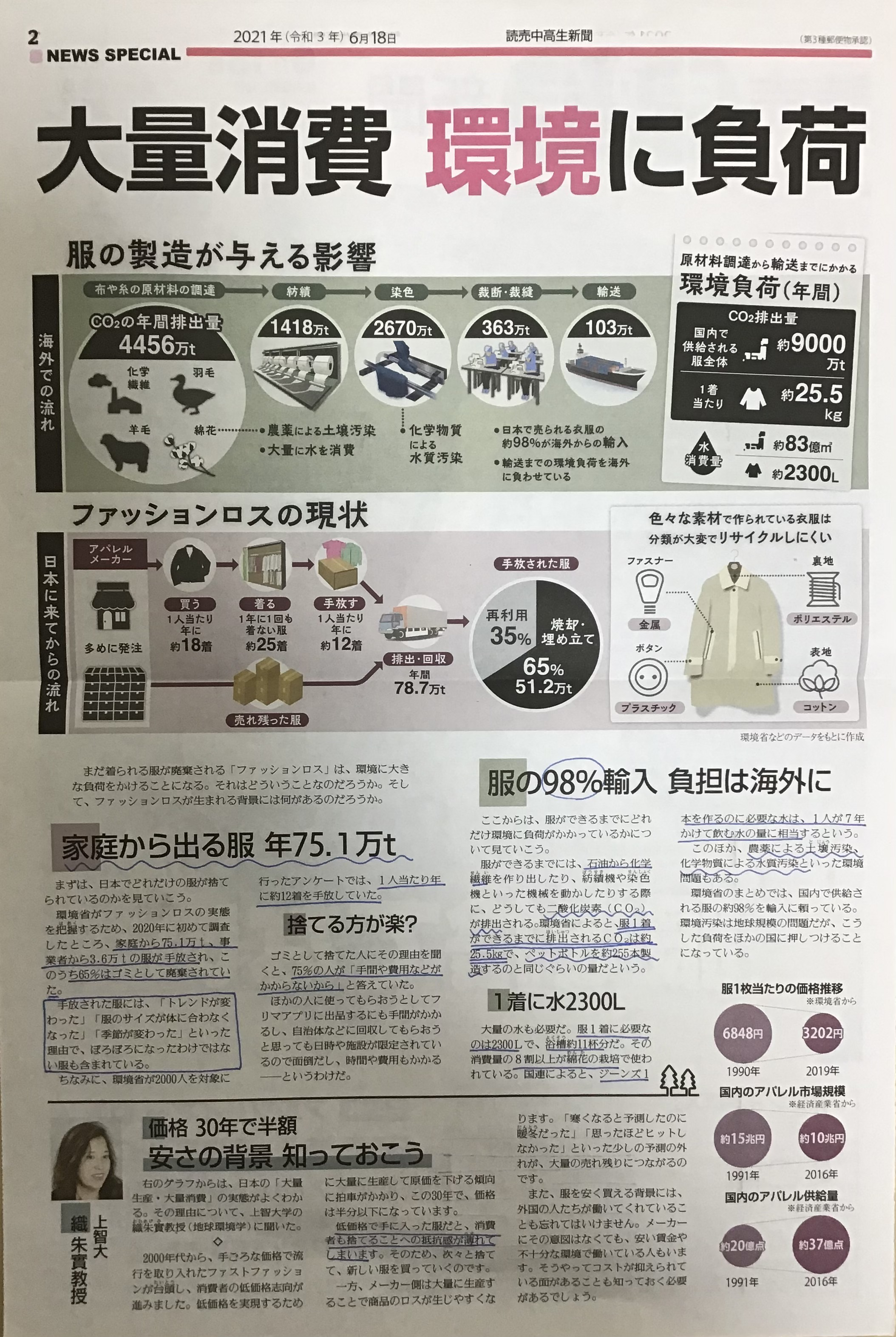
Fashion loss," where clothes that can still be worn are discarded, is a huge burden on the environment. In Japan, 751,000 tons of clothes are given away annually by households and 36,000 tons by businesses, 63% of which are disposed of as garbage. This includes clothes that have not fallen apart due to "changing trends," "clothes that no longer fit," or "changing seasons. Another reason is that consumers are less inclined to throw away clothes when they are available at low prices. When those who threw away their clothes as garbage were asked why they did so, 75% of them answered that it was because it did not require any effort or expense.
In the process of making clothes, carbon dioxide is inevitably emitted due to the production of chemical fibers from petroleum. According to the Ministry of the Environment, about 25.5 kg of carbon dioxide is emitted to make a single piece of clothing, which is about the same amount as making 255 PET bottles. We also need water. It takes 2,300 liters of water to make one garment, which is equivalent to about 11 bathtubs. According to the United Nations, the amount of water needed to make a pair of jeans is equivalent to the amount of water a person drinks over seven years. In addition, there are other environmental problems such as soil pollution caused by pesticides and water pollution caused by chemical substances.
In addition, we should not forget that the reason we are able to buy clothes at affordable prices today is because of the work of people from other countries. Some of them work for cheap wages and inadequate conditions, even if the manufacturers have no intention to do so. It is also important to know that some costs are kept down in this way.

 @@
ƒsummary„
@@
ƒsummary„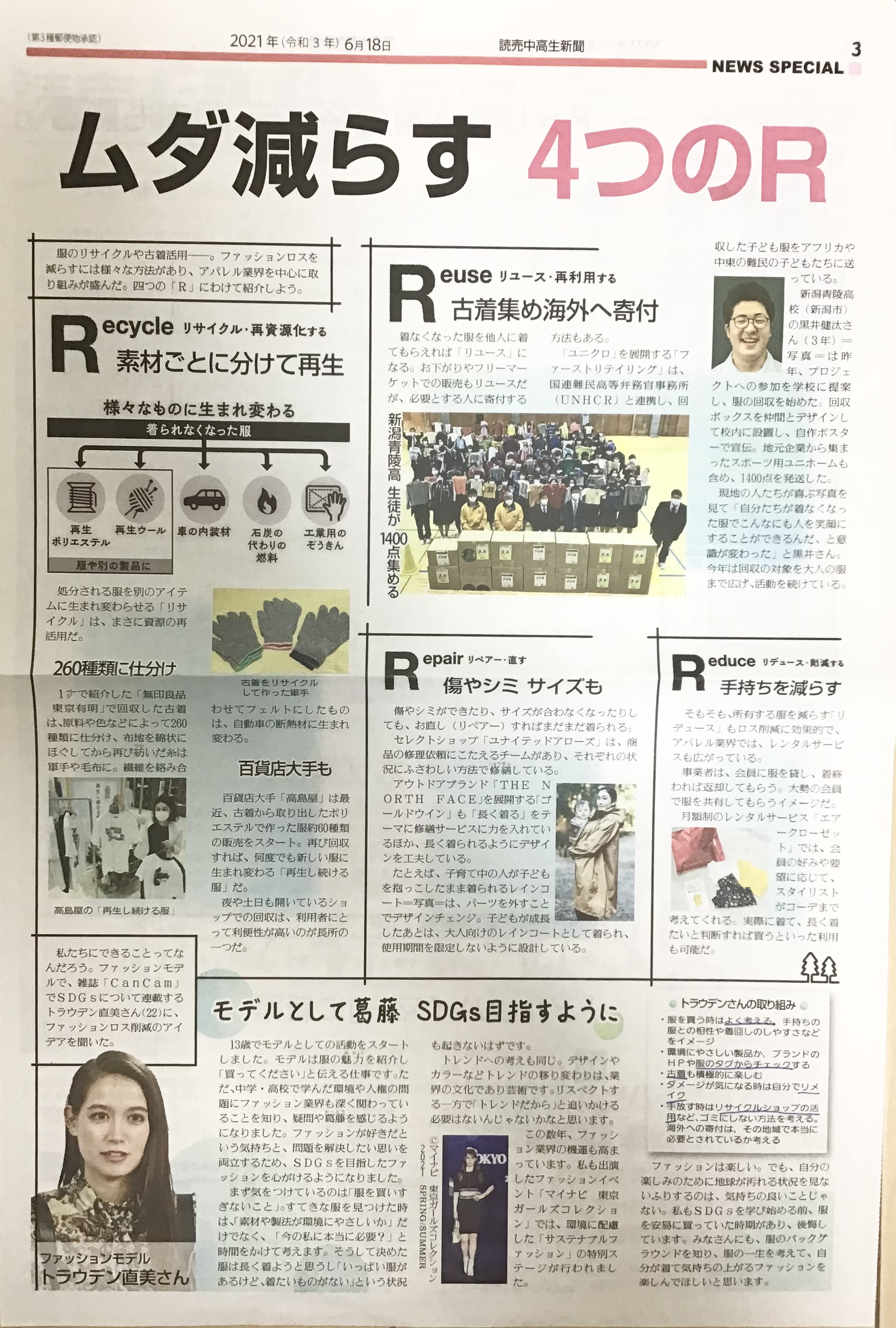 ƒsummary„
 ƒsummary„